Product Description
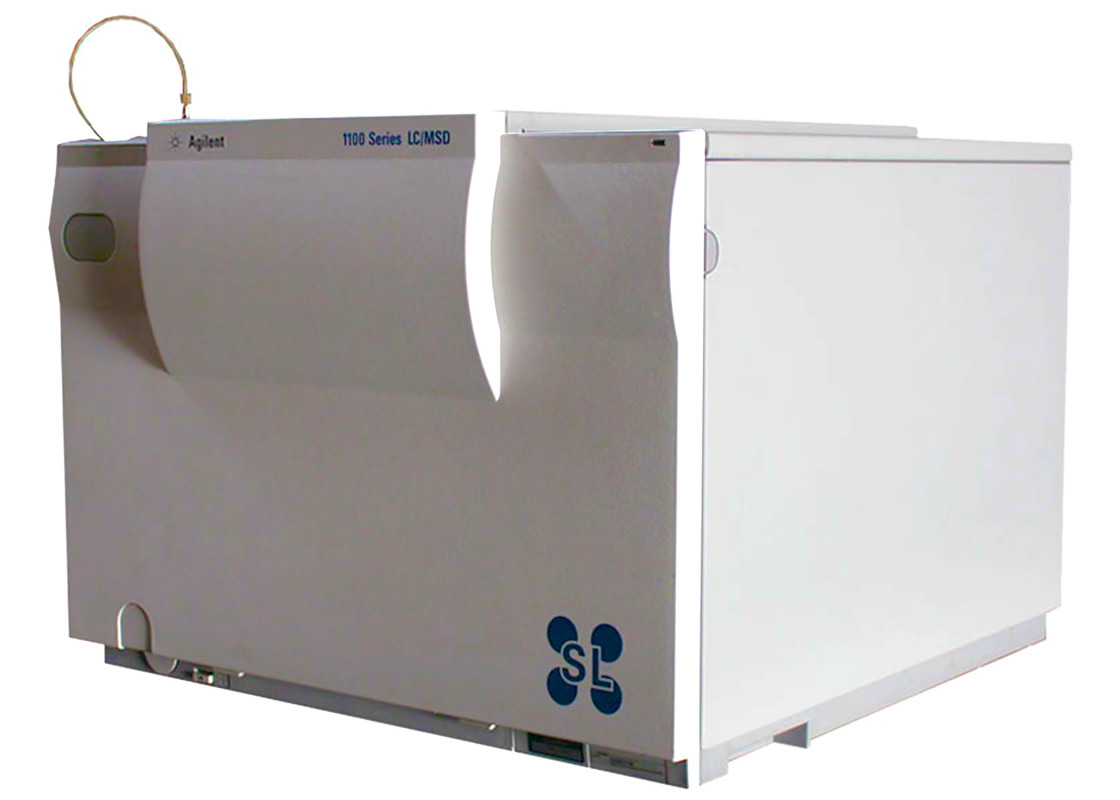
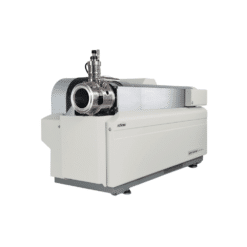
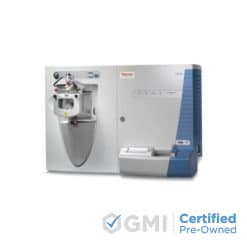
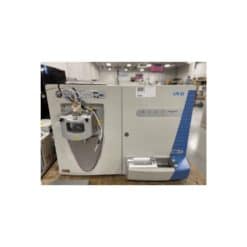
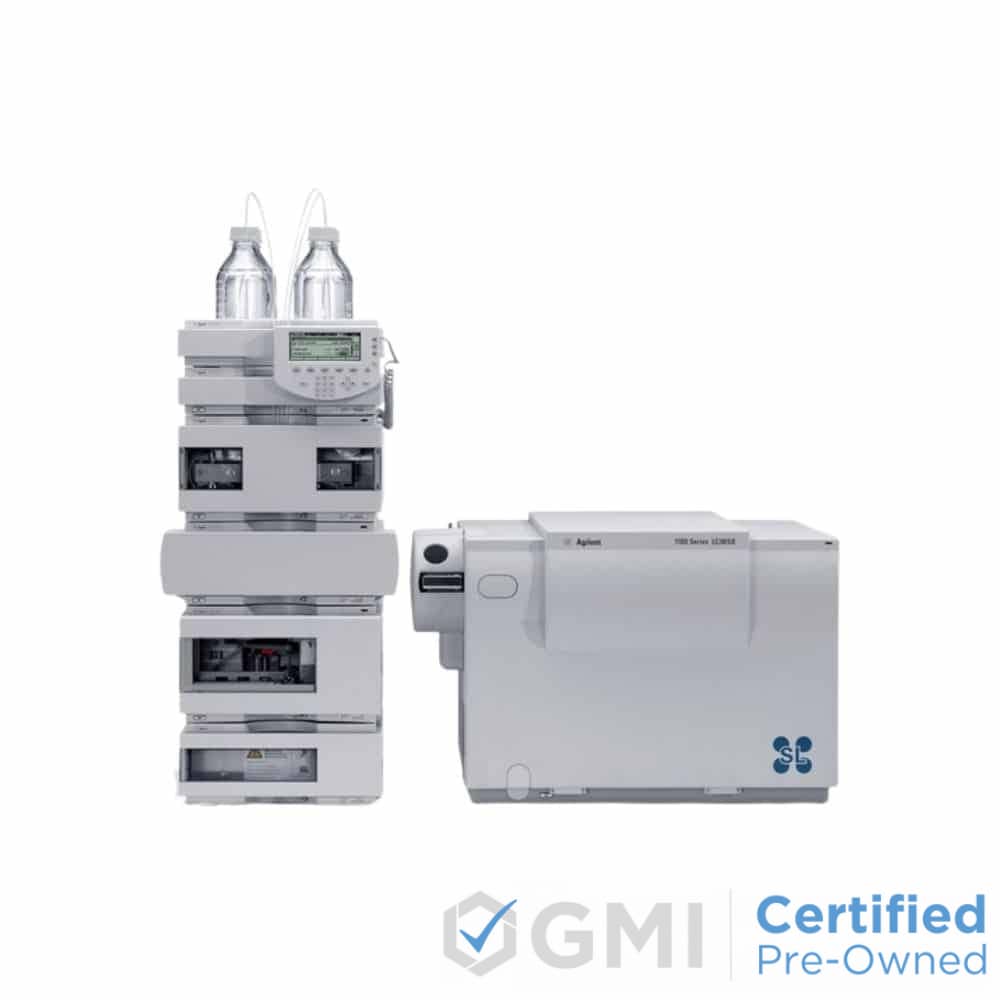
- Agilent 1100 LC/MSD Model G1946D
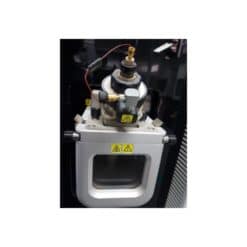
- ElectroSpray ionization Source
- Mass Range 2-3000 amu
- LAN Communications
- Roughing Pump
- Complete Data system
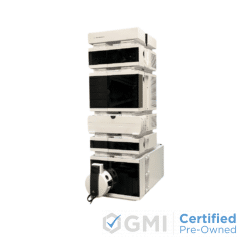
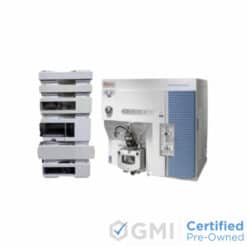
Agilent 1100 G1956D LC MS refurbished to specifications, ESI source, roughing pump, complete data system.
*Professional installation available.
In 1997 HP introduces its first benchtop quadrupole LC/MS the 1100 Series LC/MSD. The 1100 Series LC/MSD provides information quickly in one chromatographic run. It provides molecular weight structural information and has excellent selectivity needed to identify compounds check the purity of chromatographic peaks and quantitate trace level samples in complex matrices in a rugged reliable easy-to-use benchtop system. For chromatographers and mass spectrometrists who need the utmost in sensitivity the LC/MSD SL makes analyses in the very low picogram range possible*
The 1100 Series LC/MSD offers many advantages as an LC detector. It offers the dynamic range and repeatability needed for most quantitative applications. In the SIM mode it offers high sensitivity. For compounds lacking a strong chromophore it offers detection limits not possible with other detectors. By offering unit mass resolution to m/z 3000 the LC/MSD allows for characterization of large proteins beyond 60000 KDalton. Having extended mass range to 3000 is also beneficial when studying modified proteins such as glycoproteins where their charge distribution falls above m/z 2000.
The Agilent 1100 Series LC/MSD is a benchtop mass spectrometer designed to be integrated with the 1100 Series HPLC System. It is a quadrupole based atmospheric pressure ionization (API) instrument capable of doing both electrospray ionization (ESI) and atmospheric pressure chemical ionization (APCI). The LC/MSD can handle normal HPLC flow rates (1 ml/min) without splitting the effluent and with minimal adjustment of the spray chamber.
Optional Configuration
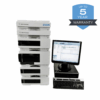
- Agilent/HP 1100 Series G1312A Binary Pump
- Agilent/HP 1100 Series G1313 Autosampler
- Agilent/HP 1100 Series G1316A Column compartment
- Agilent/HP 1100 Series G1322A Degasser and Solvent tray
- More Configurations available
Let our team of experts help you find the perfect equipment for your application and budget, schedule a free meeting now:
Specifications
| Mass Range | 2-3000 amu |
| Mass Accuracy | plus / minus 0.13 u within the calibrated mass range in scan model |
| Mass Axis Stability | plus / minus 0.13 u over 8 hours |
| Scan Speed | 2500 u/s standard mode 5250 u/s fast scan mode |
| SIM Sensitivity | ESI at 400 ul/min APCI at 1000 ul/min Selected ion monitoring of m/z 609.3 Positive ionization Signal To Noise Ratio Quantity: 1 pg reserpine 100:1 RMS (20:1 peak-to-peak) |
| Scan Sensitivity | ESI at 400 ul/min APCI at 1000 ul/min Scan range m/z 100-650 Scan speed 2500 u/s Extracted ion at m/z 609.3 Positive ionization Signal To Noise Ratio Quantity: 50 pg reserpine 100:1 RMS (20:1 peak-to-peak) |
| Multiple Signal Acquisition | Ability to cycle |
Pharmaceutical
Mass spectrometry plays an important role in the entire life cycle of a drug from discovery to development to manufacturing. In drug discovery LC/MS systems are the method of choice for identifying and characterizing of drug candidates produced by combinatorial chemistry or extracted from natural products. They are also a primary tool used to check drug compound quality during manufacturing.
Proteomics
Proteomics is the large-scale analysis of proteins for disease research and drug discovery. MS analysis is a fundamental tool for proteomic research. In addition to LC/MS instruments for identifying and quantifying proteins in biological samples Agilent has developed wide range of complementary technologies to help researchers prepare separate analyze identify and interpret challenging protein samples.
Metabolomics
This rapidly growing area of life science research is the study of small molecules known as “metabolites” which are products of metabolism in tissues. The makeup of these sets of molecules is increasingly being associated with a number of illnesses. GC/MS and LC/MS are the main analytical techniques to detect and measure large numbers of metabolites. Agilent also offers the METLIN personal metabolite database to help users identify the metabolites they find and profiling software to compare large sets of metabolite data to one another.
Environmental
The ability to identify and quantify pollutants is essential to maintaining a health environment. A mainstay of environmental testing GC/MS is used to detect volatile organic compounds such as pesticides. Agilent is the worldwide leader in GC/MS. Inductively coupled plasma mass spectrometry (ICP-MS) helps identify and quantify inorganic compounds and heavy metals. LC/MS is a popular complement to GC/MS; it can analyze more fragile chemicals that may not stand up well to GC/MS analysis.
Food safety
GC/MS LC/MS and ICP-MS are widely employed for food safety testing which includes the analysis of additives residues contaminates and toxins in agricultural products and foods. The need for food testing is growing rapidly driven by the liberalization of global trade a more stringent regulatory environment and increased public awareness of food safety issues.
Applications
Mass spectrometry has long been a mainstay in applications that involve the analysis of small thermally stable organic compounds inorganic compounds and metals. More recently the development of new technology has dramatically increased the ability of mass spectrometers to analyze large relatively fragile biological molecules such as proteins opening vast new applications for MS. Important applications and markets for MS include:
Forensics
Agilent is the worldwide leading provider of GC/MS systems for drug screening and toxicology. As with the environmental industry Agilent LC/MS systems are beginning to be employed for forensic analyses as a complement to GC/MS. ICP-MS coupled to laser ablation (LA-ICP-MS) is also useful for measuring solid samples as well as for elemental fingerprinting of materials in forensic investigations
Hydrocarbon Processing Industries (HPI)
HPI comprises the petroleum petrochemical fine and specialty chemical natural gas industrial gas and fuel cell industries. Agilent mass spectrometers particularly GC/MS systems are routinely used process performance in QA/QC and process control.
|
Feature/Benefit
|
Agilent 1100 Series
|
Agilent 1200 & 1260 Series
|
|
Cost-Effectiveness
|
More affordable, offering great value for its capabilities.
|
Generally more expensive, especially for newer models.
|
|
Proven Reliability
|
Time-tested reliability in a wide range of applications.
|
Newer technology, but with less long-term usage data.
|
|
Simplicity and Ease of Use
|
Straightforward operation, ideal for routine analyses.
|
More complex features that might not be necessary for all users.
|
|
Maintenance and Support
|
Established support networks due to its widespread use.
|
Parts and support might be more expensive.
|
|
Performance
|
Excellent performance for standard analytical needs.
|
Advanced capabilities that might exceed routine requirements.
|
|
Modularity
|
Modular design makes service & redundancies easy to achieve
|
Modular design makes service & redundancies easy to achieve
|
|
Pressure Range
|
Adequate for most traditional HPLC methods.
|
Higher pressure ranges not always needed for standard applications.
|
|
Detection Capabilities
|
Solid and reliable detection capabilities.
|
Enhanced sensitivity that may not be necessary for all analyses.
|
|
Software Compatibility
|
Compatible with many standard software platforms.
|
May require upgrades or new software purchases.
|
|
Sample Throughput
|
Suitable for labs with standard throughput needs.
|
Higher throughput capabilities that may not be utilized in all settings.
|
|
Legacy System Integration
|
Easier integration with existing older systems.
|
May require additional adjustments to integrate with older systems.
|


Reviews
There are no reviews yet.