"Great company to work with. Good customer service and a technical support staff that is responsive. Have been working with them for my company's chromatography equipment needs for several years now and hope it will be several more."
Gas Chromatography Instrument for Advanced Uses: A Practitioner’s Guide
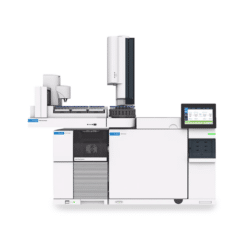
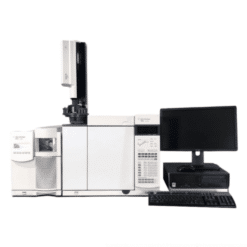
Gas chromatography (GC) remains the reference technique for separating and quantifying volatile and semi-volatile compounds across pharmaceuticals, environmental testing, food and beverage, petrochemicals, and forensics. GMI’s certified pre-owned GC platforms deliver new-instrument analytical performance with documented refurbishments, validation support, and material savings—ideal for labs that require reproducible results without extended lead times.
Where GC delivers the most value
Pharmaceuticals: Residual solvents (ICH Q3C), impurity profiling, chiral separations, and release testing with validated methods.
Environmental testing: VOCs and SVOCs in air, water, and soil using headspace and purge-and-trap workflows; regulatory reporting with traceable calibration.
Food and beverage: Aroma and off-flavor profiling, fatty acid methyl esters (FAMEs), process contaminants (e.g., MOSH/MOAH), and packaging volatiles.
Petrochemical: Detailed hydrocarbon analysis, simulated distillation (SIMDIS), oxygenates and sulfur species at low ppm to ppb.
Forensics and tox: Ignitable liquids screening, drug confirmation, and toxic alcohols with robust chain-of-custody documentation.
Core GC system components and options
Inlets: Split/splitless, PTV, on-column, and multi-mode inlets for broad volatility ranges and thermally labile analytes.
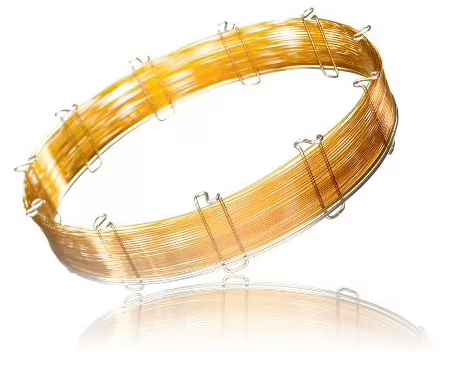
Columns: Fused-silica capillaries (non-polar to highly polar), porous layer open tubular (PLOT) for permanent gases and light hydrocarbons, chiral phases for enantiomeric resolution.
Detectors:
FID: Universal for organics, wide dynamic range, ideal for hydrocarbons.
TCD: Universal, non-destructive; permanent gases and bulk components.
ECD: Halogenated compounds and pesticides at ultra-trace levels.
NPD/FPD/SCD: Nitrogen, phosphorus, and sulfur specificity for agrochem and fuel matrices.
MS (GC-MS/GC-MS/MS): Structural identification and sub-ppb quantitation with selected ion monitoring or MRM.
Sampling interfaces: Static/dynamic headspace, SPME, purge-and-trap, thermal desorption, and valve-based multi-stream sampling for complex matrices.
Method design for advanced use cases
Define analytical targets and matrices. Set required LOQs, linear range, and selectivity.
Choose inlet and liner geometry based on volatility and load; optimize split ratio to balance sensitivity and peak shape.
Column selection and temperature program. Match stationary phase polarity to analyte chemistry; use multi-rate ramps to sharpen co-eluting peaks.
Carrier gas strategy. Hydrogen improves speed/efficiency; helium offers robustness; nitrogen suits TCD work. Validate resolution and safety constraints.
Detector or MS parameters. For FID/ECD, optimize gas flows and temps; for MS, tune EI/CI source, quadrupole temps, SIM/MRM transitions, and collision energies.
Quantitation and QC. Use internal standards/surrogates, multi-point calibration with appropriate weighting, continuing calibration verification, blanks, spikes, and control charts.
Data integrity and compliance. CFR Part 11-supportive configurations, audit trails, and secure user roles for regulated environments.
Performance metrics to track
Resolution (Rs) and peak symmetry (As): Ensure baseline separation and reliable integration.
Sensitivity: LOD/LOQ verified with matrix-matched standards; monitor signal-to-noise.
Linearity and range: R² and residuals across expected concentrations; confirm absence of curvature.
Precision and accuracy: Intra/inter-day %RSD, recovery on spiked samples, and robustness under small method perturbations.
System suitability: Retention time windows, response factors, and daily checks before batch release.
Why choose GMI Certified Pre-Owned GC systems
Expert re-certification: Comprehensive refurbishment to OEM specs, including injectors, pneumatics, ovens, EPCs, detectors, and MS vacuum paths where applicable.
Documented calibration: Flow, temperature, detector response, and—when MS is included—mass axis and sensitivity, all with traceable records.
Guaranteed performance: Acceptance testing for resolution, sensitivity, and stability aligned to target applications.
Material savings: Typical reductions up to 50% versus new procurement, with shorter deployment timelines.
Lifecycle support: Installation, method transfer assistance, user training, preventative maintenance, and responsive troubleshooting.
Warranty coverage: Configurable protection plans matched to your uptime requirements.
Representative configurations available
GC-FID systems: High-throughput hydrocarbon quantitation and FAME profiling.
GC-MS/GC-MS/MS: Structural confirmation and trace-level quantitation for complex matrices.
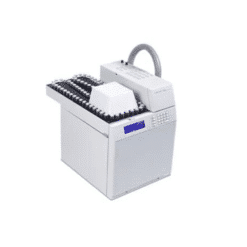
Headspace GC: Residual solvents, packaging volatiles, and fermentation monitoring.
Multi-detector platforms: Dual FID/ECD, FID/TCD, or sulfur-selective pairings for orthogonal confirmation.
Elevate your analytical capacity
If your roadmap includes tighter LOQs, faster cycles, or multipurpose selectivity, a properly configured GC or GC-MS platform will increase throughput and confidence in decisions. GMI equips you with proven hardware, documented performance, and ongoing expertise.